Driving is one of the best ways to experience Armenia, taking you beyond the vibrant streets of Yerevan to breathtaking mountain scenery, centuries-old monasteries, and hidden gems that are often difficult to reach by public transport. Whether you're planning a short city break or a road trip across the country, understanding Armenia's driving rules, road signs, and local regulations will help you travel safely and with confidence. With Final Rentals, hiring a car is simple, allowing you to focus on enjoying the journey rather than worrying about the logistics. Before setting off, it's important to understand the key requirements and road rules that every driver should know.

Yes, tourists are generally allowed to drive in Armenia provided they meet the country's legal requirements. Visitors should carry a valid driving licence issued in their home country, and depending on where that licence was issued, an International Driving Permit (IDP) may also be required. Since regulations can vary according to nationality, it is advisable to check the latest requirements before travelling to avoid any complications upon arrival.
When driving, you should always keep your passport, driving licence, rental agreement, and insurance documents inside the vehicle, as police officers may request to see them during routine traffic checks. Most rental companies provide all necessary paperwork when you collect your vehicle and will explain any local regulations you should be aware of before setting off. Ensuring your documentation is complete before starting your journey will help you travel with confidence throughout the country.
Like most European countries, Armenia drives on the right-hand side of the road, with overtaking on the left. Vehicles are left-hand drive, so travellers from countries that drive on the left may need a short time to adjust. Take extra care when entering roundabouts, turning at junctions, and overtaking until you become familiar with local driving conditions. Staying alert during your first few hours on the road will help you adapt more comfortably.
The legal driving age in Armenia is 18, but most car rental companies require drivers to be at least 21 and to have held a valid driving licence for at least 1 year. Some vehicle categories, such as luxury cars or larger SUVs, may have higher age requirements, and younger drivers could be charged an additional surcharge. Checking your rental company's policy before booking will help you choose a suitable vehicle and avoid unexpected fees.
Speed limits in Armenia are clearly signposted. The standard limits are 60 km/h in towns and cities, 90 km/h on rural roads, and 110 km/h on motorways, unless otherwise indicated. Speed cameras and police patrols are common, particularly around Yerevan, so always follow posted limits and adjust your speed for road and weather conditions to avoid fines.
Seat belts are mandatory for drivers and front-seat passengers, while rear-seat passengers must also wear them where fitted. Children should travel in an appropriate child restraint, which many rental companies can provide if requested in advance. Following these rules improves safety and helps ensure you comply with local traffic laws.
Armenia has a legal blood alcohol concentration (BAC) limit of 0.05% for most drivers, but it's safest to avoid drinking altogether before driving. Police regularly carry out roadside checks, and exceeding the limit can result in heavy fines, licence suspension, or other legal penalties. If you plan to enjoy Armenia's local wines, use a taxi or arrange for a designated driver instead.
Using a handheld mobile phone while driving is illegal in Armenia, although hands-free systems are permitted. To minimise distractions, programme your navigation before setting off and pull over safely if you need to adjust your route or use your phone. This helps you stay focused on the road, particularly when driving in unfamiliar areas.
Road conditions in Armenia vary depending on where you are travelling. Major roads connecting cities are generally well-maintained, while rural routes may be narrower, less developed, and more affected by weather. If you plan to explore beyond Yerevan, understanding these differences will help you prepare for a safer and more comfortable journey.
Many of Armenia's top attractions are reached via scenic mountain roads that wind through forests and valleys. While these routes offer spectacular views, they may also include steep gradients, sharp bends, and uneven surfaces, so drive carefully and allow extra travel time.
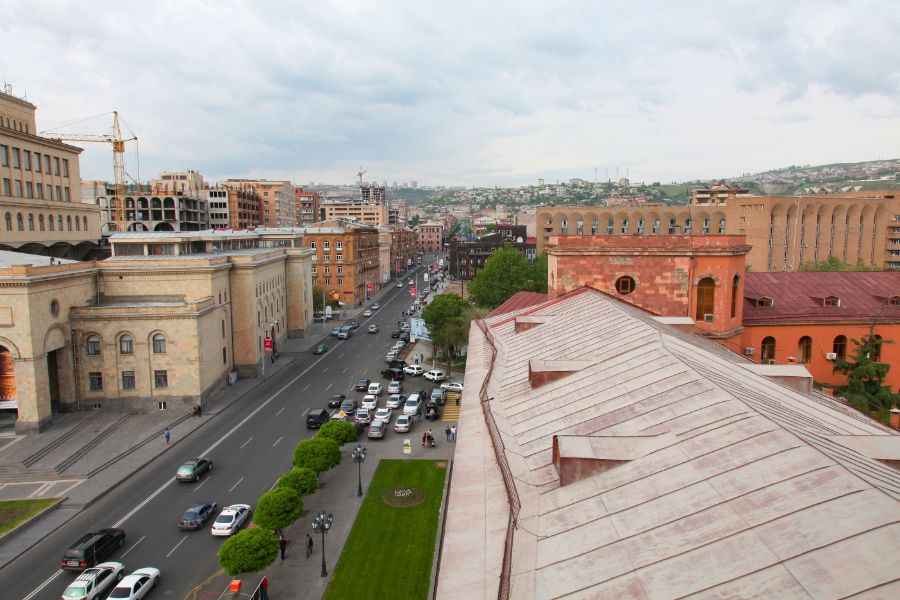
Yerevan has some of the country's best-maintained roads, making it relatively easy to navigate. Major roads are wide, clearly marked, and equipped with traffic lights, although congestion is common during weekday morning and evening rush hours, especially near busy junctions and business districts.
Visitors should also expect busy roundabouts and frequent lane changes, so staying patient and alert is important. Navigation apps work well throughout the city, making it easier to reach hotels, restaurants, and popular attractions.
Beyond Yerevan, road conditions become more varied as routes pass through villages, farmland, and mountainous regions. While many highways are in good condition, smaller roads may be narrower, uneven, or poorly lit after dark, and you may encounter livestock or slow-moving farm vehicles along the way.
Mountain roads require extra care due to steep climbs, sharp bends, and changing weather conditions. If you're travelling to remote areas, driving during daylight hours is recommended, as better visibility makes it easier to spot hazards and enjoy the scenery safely.
Fuel stations are readily available throughout Yerevan and along the country's major highways, making it relatively easy to keep your vehicle refuelled during your journey. Most stations provide both petrol and diesel, while many also offer convenience shops where travellers can purchase snacks, drinks, and other essentials before continuing their trip.
If you're travelling to remote villages or mountainous areas, refuel whenever you have the opportunity rather than waiting until your tank is nearly empty. Petrol stations are less frequent in rural areas, and opening hours may vary by location. Topping up your tank whenever you pass through a larger town provides extra peace of mind and helps ensure your road trip continues without unnecessary interruptions.
Parking in Yerevan is generally straightforward, although finding a space in the city centre may take longer during busy periods. Many central streets have paid parking, while shopping centres, hotels, and major attractions often offer designated parking areas. Always check parking signs and payment instructions to avoid fines.
Avoid parking in restricted areas, blocking entrances, or stopping on pavements, as parking regulations are actively enforced. If you're staying overnight, it's worth asking your hotel whether complimentary or secure parking is available.

Road signs in Armenia generally follow internationally recognised designs, making them easy for most foreign drivers to understand. Although some signs are written in Armenian, their colours, shapes, and symbols are similar to those used across Europe, and many directional signs on major roads also include English place names. While road signs are generally reliable, using a navigation app is recommended, especially when travelling through rural areas.
Familiarising yourself with the main types of road signs before setting off can make driving more straightforward. Recognising warning, regulatory, information, and direction signs will help you navigate safely and comply with local traffic laws.
Warning signs are usually triangular with a red border and alert drivers to potential hazards ahead. Common examples include sharp bends, steep gradients, falling rocks, pedestrian crossings, school zones, roadworks, and slippery road surfaces.
These signs are especially important on rural and mountain roads, where conditions can change quickly. Slow down when approaching a warning sign and stay alert for hazards that may not be immediately visible.
Regulatory signs indicate traffic laws that drivers must follow. Usually circular in shape, they display speed limits, one-way streets, no-entry zones, parking restrictions, and overtaking rules, while the familiar Stop and Give Way signs retain their standard shapes.
Ignoring these signs can lead to fines, particularly in urban areas where traffic laws are more closely enforced. Be sure to watch for temporary signs around roadworks, as they may introduce reduced speed limits or altered traffic routes.
Information signs, typically blue or green, guide drivers to essential services such as fuel stations, hospitals, hotels, restaurants, parking areas, and tourist attractions. They are particularly useful on longer journeys, helping you locate facilities along your route.
Many of these signs feature internationally recognised symbols, making them easy to understand regardless of language. Paying attention to them can make travelling through unfamiliar areas much more convenient.
Direction signs guide drivers between cities, towns, and major attractions. On principal routes connecting destinations such as Yerevan, Dilijan, Gyumri, and Lake Sevan, signs are generally clear and often display place names in both Armenian and English. If you're travelling to remote villages or mountain regions, consider downloading offline maps before leaving the city. This ensures you can continue navigating even if mobile coverage becomes limited.
Armenia's mountain roads lead to some of the country's most spectacular scenery, including historic monasteries, national parks, and breathtaking viewpoints. These routes often feature steep climbs, sharp bends, and changing weather, so extra care is essential.
Drive at a safe speed: Maintain a moderate speed and only overtake when it is completely safe to do so. This gives you more time to react to bends, traffic, and changing road conditions.
Use the correct gear: Shift into a lower gear when descending steep hills to reduce strain on your brakes. This improves vehicle control and helps prevent brake overheating on long downhill sections.
Watch for hazards: Be aware of animals, cyclists, and other unexpected obstacles, particularly on narrow mountain roads. Staying focused will help you respond safely to changing conditions.
Prepare for the weather: Carry drinking water, a fully charged mobile phone, and warm clothing, even in summer. Temperatures can drop quickly at higher elevations, so it's best to be prepared.
Winter brings snow-covered scenery to much of Armenia, particularly in the mountains, where snowfall and icy roads can make driving more challenging from late autumn to early spring. If you're travelling during this time, make sure your rental car is equipped with winter tyres, allow extra time for your journey, maintain a safe following distance, and avoid sudden braking or sharp steering. It's also a good idea to check the weather forecast before travelling, especially if your route includes mountain passes where conditions can change quickly.
Before setting off, save Armenia's emergency number, 112, so you can quickly contact emergency services if needed. It's also a good idea to keep your rental company's contact details handy for roadside assistance or mechanical issues, and familiarise yourself with the vehicle and emergency procedures before starting your journey.
Navigation apps make it easy to get around Armenia, offering directions, estimated journey times, and traffic updates throughout most of the country. Before travelling to remote mountain areas, download offline maps, as mobile coverage can be less reliable outside cities and major roads. This ensures you can continue navigating confidently even without an internet connection.
Driving in Armenia is generally straightforward, but understanding local driving habits will help you feel more confident behind the wheel. Staying patient and aware of other road users contributes to a safer and more enjoyable journey.
Respect other road users: Use your indicators before changing lanes, give pedestrians priority at crossings, and leave enough space between vehicles. These simple habits improve safety and keep traffic moving smoothly.
Stay calm in traffic: Avoid using your horn unnecessarily and remain patient during congestion. Allowing extra travel time reduces stress and helps you make better decisions on the road.
Drive defensively: Anticipate the actions of other drivers, cyclists, and pedestrians, particularly in busy areas. Staying alert allows you to react safely to changing traffic conditions.

Booking your rental vehicle before arriving in Armenia gives you access to a wider choice of vehicles and often better prices, especially during summer and public holidays when demand is high. It also makes it easier to request extras such as child seats or additional drivers.
You can book a rental car online before your trip, choose from flexible car rental options, and select the vehicle that best suits your travel plans. Whether you're exploring Yerevan or heading into the mountains, now is the perfect time to book a car in Armenia and enjoy a smooth, stress-free journey.
Driving in Armenia is one of the best ways to experience the country's stunning landscapes, rich history, and vibrant culture, from the lively streets of Yerevan to scenic mountain roads leading to ancient monasteries and tranquil lakes. By understanding the local traffic rules and road signs, you'll be well prepared for a safe and memorable journey. With car rental in Armenia, you can travel on your own schedule using flexible car rental options, book a rental car online, and rent a car in Armenia before you arrive. For added convenience, download the Final Rentals app from the Google Play Store or the Apple App Store to manage your booking and access your reservation details throughout your trip.
Whether you need an International Driving Permit (IDP) depends on the country that issued your driving licence. Check the latest requirements before travelling, and always carry your licence, passport, and rental documents when driving.
Yerevan's roads are generally well-maintained and easy to navigate, although traffic can become busy during weekday rush hours. Allow extra travel time, stay patient in congestion, and use a navigation app to make getting around the city easier.
Many directional signs on major roads include both Armenian and English place names, while warning and regulatory signs follow internationally recognised symbols. Familiarising yourself with the most common road signs before your trip will make driving more straightforward.
Snow and icy roads are more common in mountainous areas between late autumn and early spring, so extra care is needed. Choose a rental car fitted with winter tyres and check the weather forecast before travelling through higher elevations.
Yes, hiring a car makes it easier to visit attractions such as Lake Sevan, Garni Temple, and Dilijan without relying on public transport. Choosing a car rental in Armenia also gives you the flexibility to explore scenic routes and lesser-known destinations at your own pace.